John 1:14 (WEB)
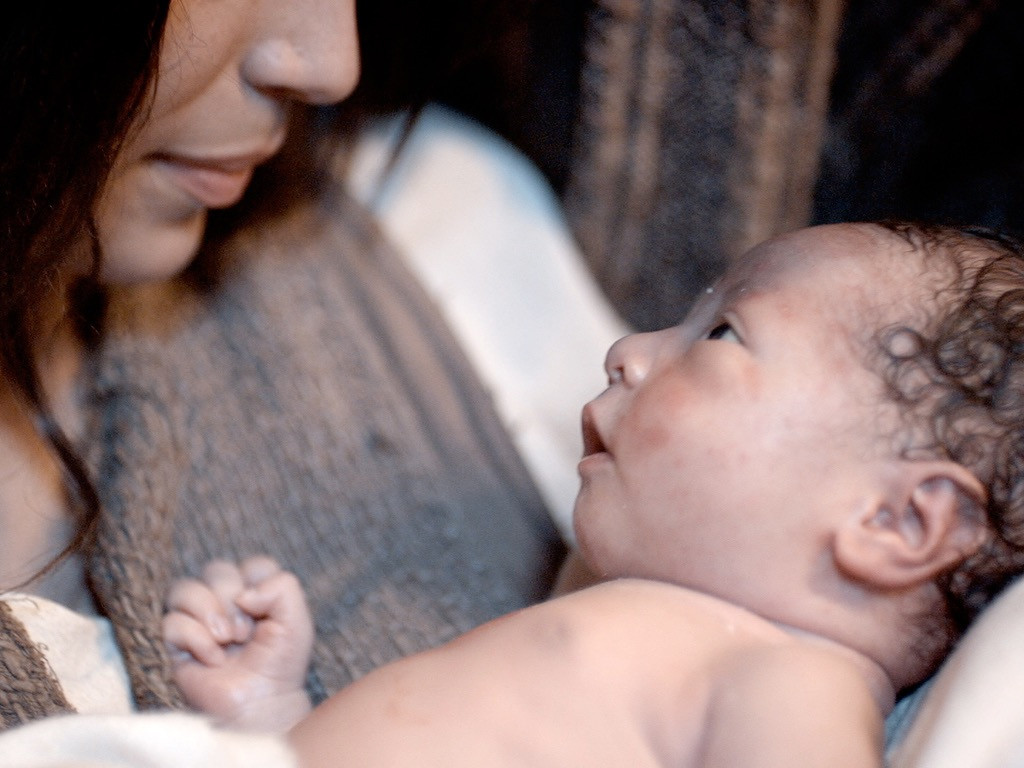
The Word became flesh and lived among us. We saw his glory, such glory as of the only born Son of the Father, full of grace and truth.
If there is one aspect of the Christmas story that has drawn consistent skepticism though the years, it is the virgin birth. The virgin birth could easily be dismissed as the fabrication of an engaged young woman seeking to avoid the scandal of an unwed pregnancy. The best she could hope for was a shameful divorce, since her society considered an engagement as legally binding as marriage. The worst case scenario would be a public stoning. (Deut. 22:23-24)
So you can see how unbelievers in the virgin birth could say a woman in this situation would be highly motivated to make up a cover story. And if one looks at just the physical evidence, Mary did not seem to have any really good proof of her innocence. All she had was the story of an angel and a heavenly message from God, both of which could not easily be displayed as evidence.
The virgin birth is something that must be taken by faith. For the virgin birth is not something that came about from purely physical conditions. It was of spiritual origin.
There were, of course, several prophetic hints of a virgin birth. The first was in Genesis 3:15 (KJV), which we have already studied. “And I will put enmity between thee and the woman, and between thy seed and her seed; it shall bruise thy head, and thou shalt bruise his heel.” Here God talks about a deliverer who will crush Satan’s head. This deliverer is called the “seed of the woman.” It is interesting that God did not call this deliverer the seed of the man, which would be more natural.
And then we have Isaiah’s prophecy, “Therefore the Lord himself will give you a sign. Behold, the virgin will conceive, and bear a son, and shall call his name Immanuel,” which means “God with us.” (Isaiah 7:14, Matthew 1:23 – WEB) Though some debate that the word “virgin” could be translated “young woman,” I find it interesting that the 72 Jewish translators of the Septuagint used a Greek word most definitely meaning “virgin” in their translation. This was about 250 years before Jesus’ birth.
But even with these glimmers of insight, how could the virgin birth take place? Mary herself had questions about this.
Mary said to the angel, “How can this be, seeing I am a virgin? (Luke 1:34 WEB)
The angle’s explanation, and perhaps the only answer we have been given for how this came about, is in verse 35.
The angel answered her, “The Holy Spirit will come on you, and the power of the Most High will overshadow you. Therefore also the holy one who is born from you will be called the Son of God.” (Luke 1:35 WEB)
Many years later, Jesus’ own words help us to understand this a little better. Nicodemus, a Jewish teacher of the law, was in confusion about the nature of a spiritual rebirth. He could only understand birth from a material perspective. How could one be born again?
Jesus responded by using a physical phenomenon to explain a spiritual reality.
“The wind blows where it wants to, and you hear its sound, but don’t know where it comes from and where it is going. So is everyone who is born of the Spirit.” (John 3:8 WEB)
This could still be a bit difficult to understand. But if we think about it, we ourselves are both physical and spiritual beings. When God formed mankind from the dust of the earth, he gave him a physical form. But then God breathed life into that physical form, giving him a spiritual nature from God. Man became a living soul, housed within a physical body.
If God could do that, could He not also take His very spiritual nature and form and shape it into the stuff of this physical realm?
Colossians 2:9 (WEB)
For in him all the fullness of the Deity dwells bodily,…
There was also a necessity for Jesus to be both human and God. Paul talks about this when explaining the gospel. He says the gospel is the Good News which God “promised before through his prophets in the holy Scriptures, concerning his Son, who was born of the offspring of David according to the flesh, who was declared to be the Son of God with power according to the Spirit of holiness, by the resurrection from the dead, Jesus Christ our Lord,…” (Romans 1:3-4 WEB)
Paul goes on to explain in Romans 5:12,18 (WEB):
“Therefore, as sin entered into the world through one man, and death through sin, so death passed to all men because all sinned…So then as through one trespass, all men were condemned; even so through one act of righteousness, all men were justified to life.”
In Hebrews 2:14-15 (WEB), the author explains,
“Since then the children have shared in flesh and blood, he also himself in the same way partook of the same, that through death he might bring to nothing him who had the power of death, that is, the devil, and might deliver all of them who through fear of death were all their lifetime subject to bondage.”
In order for Christ to deliver us from the penalty of sin, He had to become human. But only God was capable of taking the sin of humanity and not only dying for it, but also then rising from the dead, having victory over death. This task required someone who was both human, yet Deity.
It is by the incarnation of Christ that God drew near to us and made peace between God and man. Our response is to thank God for the Virgin birth, when God Himself took on human flesh and dwelt among us. We, too, like Nicodemus, can be reborn in our own spirit through believing in Jesus.
I Peter 1:8b-9 (WEB)
In him, though now you don’t see him, yet believing, you rejoice greatly with joy that is unspeakable and full of glory, receiving the result of your faith, the salvation of your souls.
“Of The Father’s Love Begotten,” performed by Darby Hughes, 5th century hymn by Aurelius Prudentias, translated by J.M. Neale and H.M. Baker.
Scripture verses are from the World English Bible (WEB) and from the King James Bible (KJV), Public Domain